

Harriet’s Story
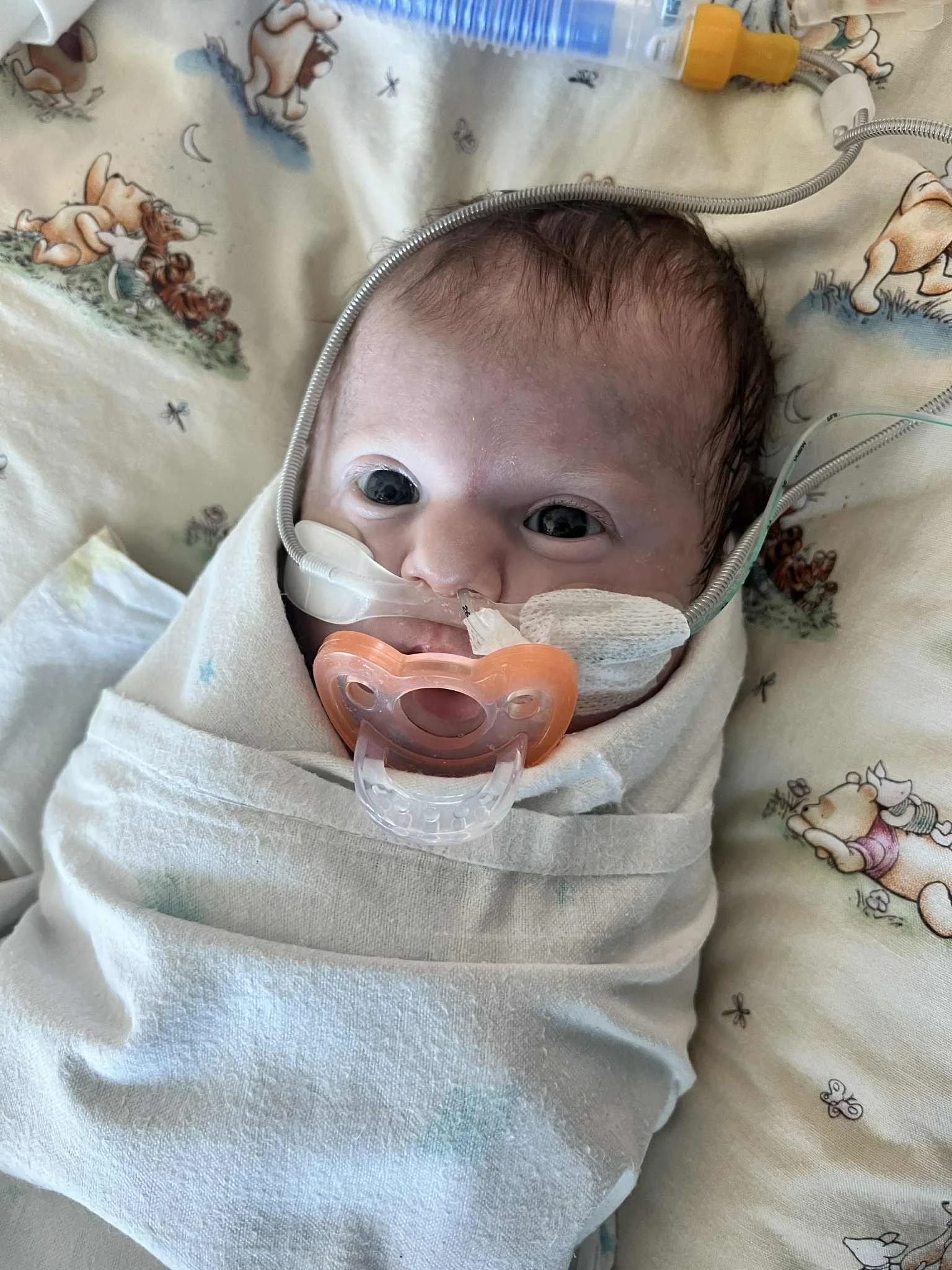
Our darling girl started as the sole tiny embryo of our first IVF cycle. A sign we always took of her strength and desire to be here. On October 18th, 2023, just as the jacaranda started blooming, our much longed for first baby Harriet was born. At our 20 week scan they found heart abnormalities, which was the first of many experiences of being taken into the ‘quiet room’ - the one with the salt lamp, tissues and hushed voices. Our path altered course, and we spent the rest of the pregnancy through the MFM team at KEMH. Though stressful, there was hope and optimism that she would have one surgery and go on to live a normal life.
This all changed the moment she was born. Her heart condition was at the most severe end of expected and she had many other medical issues from a rare genetic condition, which revealed themselves over her little life. She was transferred to PCH at 3 hours old, had open heart surgery at 5 days old and spent the next 5 weeks facing a new complication daily from both her surgery and genetic condition.
After exhausting treatment options including multiple surgeries, high risk drugs and long shots therapies, we were taken, once again, to the quiet room. We had reached the end of the road and her tiny body was at the end of its enormous fight.
She lived her brave little life in the PICU at PCH for 40 days, with some beautiful moments in between what was frankly a living nightmare. Harriet had loved bed baths, having her hair brushed, being sung to and a firm swaddle.
I had a desperate need for her to see the sky and the flowering garden we had waiting for our spring babe. Thanks to the enormous efforts of the PICU team, we were fortunate enough to bring her home for 5 beautiful hours before she passed away in our arms just shy of 6 weeks old. We were left as new mums without a baby and started out on the devastating path of grieving our daughter and her unthinkably short life and learning to live with this new reality.
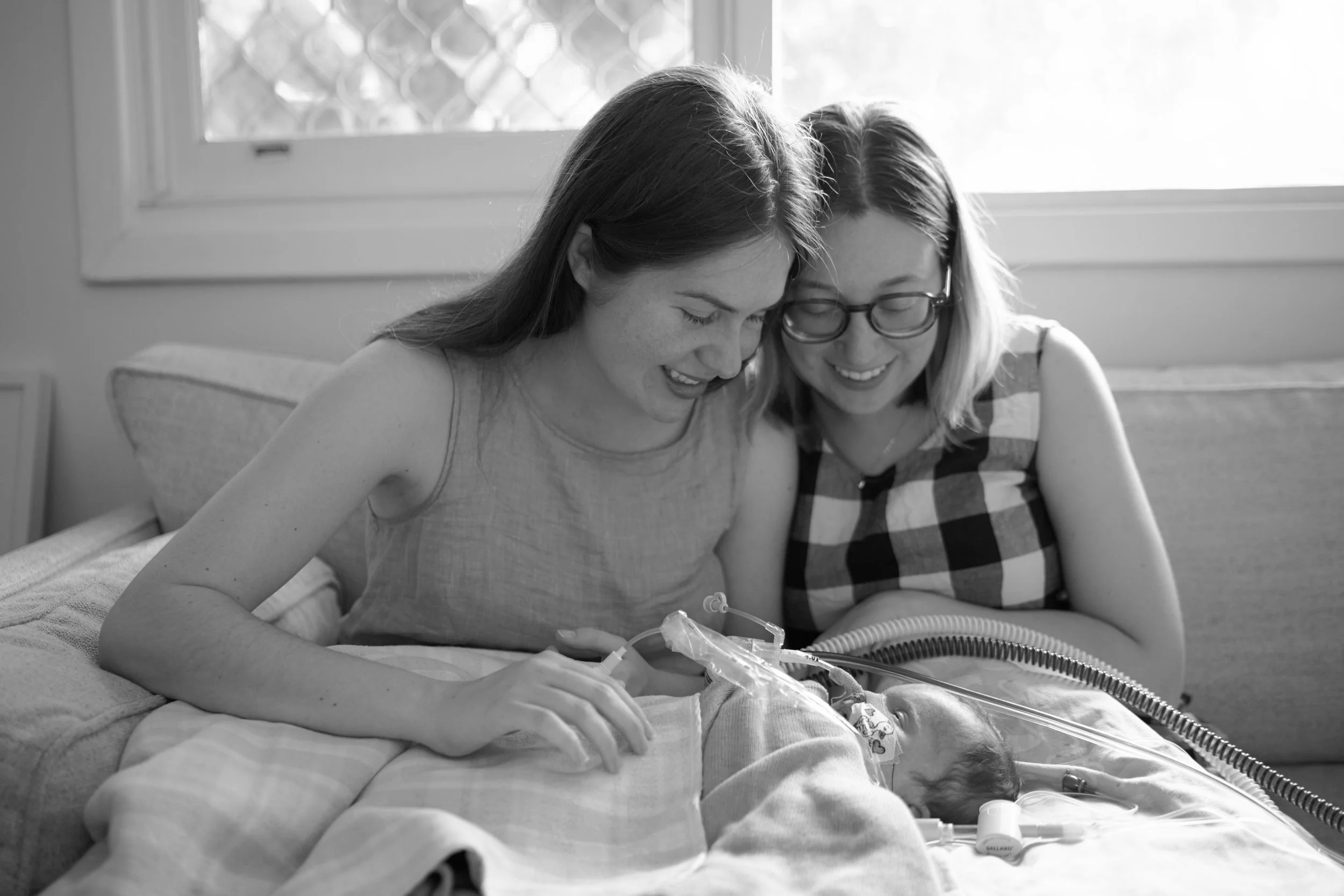
It’s somewhat overwhelming to remember those early days. It is gut wrenchingly sad and heavy. We were so grateful for the meals people brought us - sometimes the only thing we would eat, the beautiful words of kindness and those who sat with us in silence and who made us laugh.
The grief over the following 18 months was never simple or straightforward. We got married 6 months after Harriet died - a joyful, tearful day that Harriet would have loved. It ended with a surprise Australis Borealis with a perfectly pink night sky, as if her stars were enough of a presence that night. The wedding gave us something positive to talk about, a break from the frequent mental debate of how honestly should I answer ‘how are you?’ We had deep lows and gut punching disappointments during multiple rounds of IVF for my wife and me. A part of me naively expected an easy ride. Surely the universe will reward us with smooth sailing after such an awful start to motherhood. During this period I was angry and tired. I was exhausted from sharing bad news to hopeful questions. I found comfort in people who had similar experiences in TTC frustrations, and a permission to sit in whatever negative feelings I felt made me a bad friend.
Small things surprised me in grief. I could no longer do a grocery shop without having a panic attack. Delivery and click and collect were saviours. Crowds were overwhelming and our social battery was very small. The fear of small talk and conversations with people outside our closest circle was ever present. What if they ask if i have kids, or how I am today. How honest will I be? How uncomfortable am I willing to make this? How much will I need to make them feel okay about this?
We became selective with events we attended, but tried hard to maintain presence in our friends and families lives, even when it hurt.
Our psych talked to us a lot about how much physical toll grief takes on the body. The energy to exist and function in a workplace, in happy moments, in the triviality of daily life, was immense. Even when not outwardly sad. Being given permission to rest and having that validation that this overwhelming exhaustion was normal - was an immense reassurance.
Going back to work was brutal. Myself to a hospital, Catherine to classes full of toddlers and babies. It was normal to have to answer an excited ‘how’s your baby?!’ In the middle of my workday. I just accepted that I was giving all I had on a particular day, and if that was 30% productivity and 3 cries, then that was it. It did get better with time. After several months I could walk past an X-ray machine and be in the cardiology ward without breaking down, though 2 years on I still haven't been into the ICU.
We experienced grief quite differently and that was a huge thing to navigate as a couple. We learnt to recognise and acknowledge how we expressed our grief, that there were different times we feel it more and what we needed from each other.
Catherine fell pregnant 9 months after we lost Harriet. We expected anxiety and constant fear but were completely floored by such profound sadness and rage at everything normal Harriet missed out on. We experienced only fleeting moments of joy, and it was so hard to answer, ‘are you so excited?’ when ‘no’ is not really socially acceptable and made me feel like we weren't grateful. We decided this was okay. Our baby boy would get a lifetime of excitement and joy, and we would just be in whatever feeling came for now. The pregnancy fell over Harriet's first birthday, first anniversary, the second Christmas and New Year’s. The heaviness that sits around those days is profound. It builds up in the weeks leading up so gradually you don't quite notice at first. Until you do.
Then day is over and you slowly feel you can exhale.
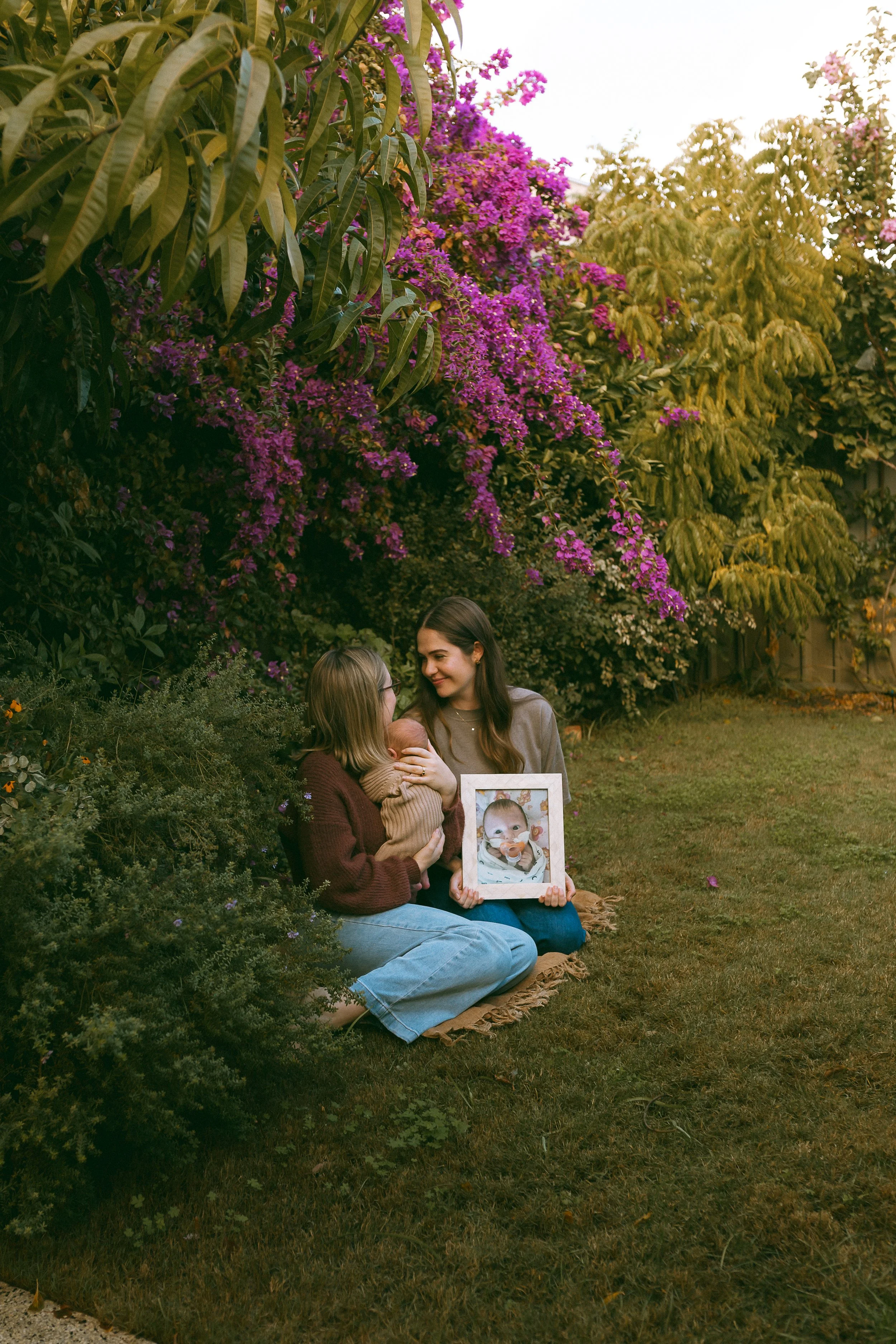
I always hated the notion of ‘healing’ from Harriet’s death. The absence of her is felt every day of our lives. There will never be a replacement. But when our son was born, and I finally had a baby in my arms, one who didn't need round the clock intensive care, a part of the ache in my soul did quieten. Harriet sent us the most perfect baby brother, and I look at him with the most profound gratitude. They share the same big blue eyes and the look of old souls. The privilege of having a healthy baby is never lost on us. It's only with him that I can really step back and see what a fog I have lived in.
I have found the analogy of the ball in the box very fitting to describe grief. The ball is your grief, the box is your life (having googled the analogy to write this piece, I now realised that I've had this wrong all along, but I'm in too deep!)
The hits of the ball on the wall are the stab of the deep, aching grief. The kind that steals your breath, that you feel in your bones and wonder if it will ever leave. But the ball keeps bouncing.
In the early days the box is so small, the ball fills it. Touching every side all the time. It is unrelenting. But over time, the box grows. The ball hits the sides less some days. Other weeks with great persistence. It is always there, this ball in the box. And as painful as those hits are, they also make me feel closer to her, sometimes it’s hard to let the ball bounce on.
Percy, our baby boy, grew our box. He made more space for laughter and simple joys. His big sister is always there though, in our box. She's in the wind and the flowers and the stars.
We have finished writing this on the eve of Harriet's 2nd birthday. A fitting timing for FOOTPRINTS which has given us such purpose as Harriets mums. This week the familiar ache has settled into the deepest parts of my body and soul. I want to scream at the universe to give her back. Give back the life we should have had with a glorious blue-eyed toddler called Harriet.
I am immensely sorry you have found yourself on this path. I hope you find some small comfort in knowing you are not alone. This path is well trod by those before me, and will be by those after you. Have gentle days. Our babies will look after each other up in the stars.